Chad's shared items

Tuesday, September 23, 2008

Gasoline Troubles in the South . . .

Gasoline shortages have been affecting Atlanta for the last week or so and are reported to continue for the next week or more.

I spent about an hour last night trying to find a gas station that still had any gasoline. I probably drove past about 20 or more that were dark or had the pumps bagged. Earlier this week we actually sat in line waiting for gasoline as our car sat on empty and I had images of pushing the car up a hill.
Hurricane Ike shut down Texas refineries that produce some 20 percent of the country's gasoline. The southern states depend more on Texas oil and gas than other parts of the country, and that's why the shortages are hitting the South particularly hard. [Times-Herald]
And it gets worse. In the past, Gas prices in Georgia were some of the lowest in the nation and are now are currently some of the highest in the nation. Yesterday, the national average for regular was $3.718. The Georgia average was $3.976, and the Atlanta average $4.021. [EIA]

Additionally, Atlanta's air quality issues have placed strict gasoline blend requirements on the area, meaning that fuel can't necessarily be diverted from other nearby locations that have additional fuel.

As of 4 pm on Monday, the Energy Information Administration (EIA) released the following report:

Petroleum
As of 12:30 pm EDT (11:30 am CDT), September 22, the Minerals Management Service was reporting that nearly 1 million barrels per day (or about 77 percent) of the federal portion of the Gulf of Mexico’s crude oil production was shut-in. As of 9:00 am EDT (8:00 am CDT), September 22, the Department of Energy reported that there are 9 refineries in Texas and Louisiana that are shut down due to Hurricane Ike. These 9 refineries have a total capacity of 2.3 million barrels per day (about 13 percent of U.S. operable capacity), and represent almost 800,000 barrels per day of gasoline output (nearly 9 percent of U.S. gasoline demand in September) and about 500,000 barrels per day of distillate fuel output (just over 12 percent of U.S. demand in September), based on recent historical data. So far, since refineries first shut down before Hurricane Gustav, over 41 million barrels of products have not been produced, including over 19 million barrels of gasoline and over 13 million barrels of distillate fuel. This does not include reduced production from refineries that have reduced runs at various times during Hurricanes Gustav or Ike. As of September 22, 6 refineries were running at a reduced rate. As of September 22, the Colonial and Plantation product pipelines continue to operate at reduced rates. Both of these are major product pipelines going from the Gulf Coast to the East Coast.

It takes several days for a refinery to get back to normal operation after first getting power restored, even if there is no significant damage following a hurricane. Refined product supplies are still constrained in portions of the country because of refining capacity that is still significantly reduced from pre-hurricane levels, as noted above. As refineries return to full production, supplies will increase into pipelines, thus providing more supplies to those that have seen constraints in the supply system. But it could take several days or even a couple of weeks before the distribution system, from refineries to retail stations, is once again at pre-hurricane operation levels.

And the moral of the story is: "Fill up often and if possible do not wait till the needle gets near the empty. If you see a station with gasoline, top off your tank and then call me and tell me where it is."

Monday, September 22, 2008

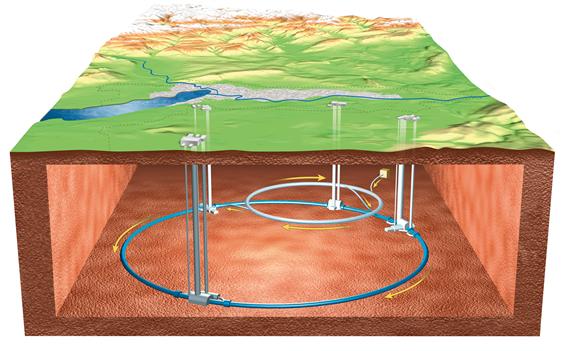
LHC Meltdown . . .


The Large Hadron Collider got a little hot under the collar and one of the doohickeys melted and fused with one of the humdingers.

CERN spokesman James Gillies explained, “"It's too early to say precisely what happened, but it seems to be a faulty electrical connection between two magnets that stopped superconducting, melted and led to a mechanical failure and let the helium out.”

Interestingly enough, the device has to be at absolute zero to work, and that would be dangerous for repairs to be made in, so they have to up the temperature in order to fix these magnets. Sounds simple right? It will take them around two months to make these repairs due to how long it takes to change the temperature in the LHC. Moving the temperature up takes a few weeks, they then have to do the repairs, and then lowering the temperature eats up another few weeks.

On the other hand, the launch could be seen as a huge success as more than a billion people tuned in to watch it break. Sure it was anti-climatic, but even breaking is pretty interesting for this freezing metal monstrosity.

The Safety of the LHC

How the LHC Works

Facts and Figures

The LHC Experiments

Data from (TimesOnline)(CERN)

Friday, September 19, 2008

Brisingr. . .


I was introduced to the Eragon/Eldest series by my brother Joe. Now he is not the Fantasy reader that I am and so I was pretty interested in this series. I am not sure how many of you are fans of this series but the new book, "Brisingr" is coming out tomorrow 09/20/08.

This book will continue where the second book, Eldest, left off with Eragon and Saphira escaping from the battle with their lives and supposedly the book goes into how Eragon has to try and juggle all of the promises that he had made to the different groups in the previous books.

Although I have enjoyed the series so far, I felt that Eldest took a step backwards from how good the first book was.

In the first book, the character had that "come alive" feeling that made it a page turner for me. However, Eldest seemed to get bogged down and I found myself wishing it would just move the story along. I hope that the third edition continues with the writing that first book started and doesn't bog down. This was in essence what ruined The Wheel of Time series for me.

If anyone reads this book and can share their viewpoint, please feel free to leave a comment.

Tuesday, September 16, 2008

Financial Thoughts . .

The Bing Blog took a very rare look at the current situation and I think that it is a very refreshing view.

Maybe all this misery is just payback

Now it seems a little vindictive and maybe the writer had a few problems with the market and the people that work with and around the market. However, it does point the finger at a group of people other than the big businesses. From the articles that I have read, the majority of articles and blogs seem to focus on the big businesses and what they are doing.

Lehman Bankruptcy: Bankruptcy laws under a Microscope

The Lehman bankruptcy problems seem to just be starting. Ultimately, this gigantic lending corporation declared bancruptcy yesterday morning and then the fun started.
“I think it’s a really scary time right now,” says Ed Morrison, a professor
and bankruptcy expert at Columbia Law School. (from the article referenced below)

Interestingly enough CNNMoney.com explains in a recent article that our law structure is setup to protect smaller entities from creditors, however for the larger beast that is Lehman it is designed to not be as protective. This is really the litmus test for these laws.

Smaller institutions get an automatic stay that basically freezes its debts like we saw with Delta recently, however Lehman will not get the same protection against many of its creditors.

In the article, Morrison goes on to explain that in 1978, and in amendments passed in 2005, most financial contracts — including securities contracts, swaps, repurchase agreements, commodities contracts, and forward trades — are unaffected by automatic stays. Worse still, as soon as Lehman’s parent corporation goes into bankruptcy, that event (under the contractual language governing most of these) triggers default, allowing the counterparty — the bank or other institution that entered into the deal with Lehman — to immediately accelerate or cancel the contract and seize whatever collateral may cover it.

Why? The thinking, Morrison explains, was that if an investment bank like Lehman ever failed, all its counterparties (like, say, a Bank of America) could extricate themselves immediately from Lehman’s troubles rather than getting mired in a bankruptcy proceeding. “They won’t be locked in and dragged down with Lehman,” Morrison says. The laws will — theoretically — minimize risk of market meltdown. (paraphrased from the article)

Ultimately, the stock market took a down turn and there is a lot of worry now about the price of oil and the housing market. Only time will tell if the trend will continue.

Monday, September 15, 2008

Awesome Halloween Costumes: Part 2


I am truly amazed by the human ability to invent things. Just looking for do it yourself Halloween costumes came up with more information than I could read in a week. After perusing this information looking for the diamonds in the rough, I have whittled it down to a few of the good ones.

It took me a minute to realize what this was, but it would be a cool project. The mask is not shown but I included the link below.

How to build an Ironman Arc Reactor.
How to build an Ironman Mask.


The previous project too easy for you? Try this complete make your own realistic werewolf costume.

How to build a realistic werewolf costume.


The blog zzilch has a post about how they used to make their own costumes with a few very good links to easy and harder costumes.

Homemade Halloween Costumes on zzilch

Sunday, September 14, 2008

Large Hadron Collider. . .

It appears that I misspelled the name of the "Doomsday" device that was supposed to wipe out life as we know it by testing black holes and thinks like that recently. I had it spelled as Halidron but I guess it should be Hadron. If you would like to know more about that device and don't mind reading scientific college textbook like PDF files feel free to follow the link below.

Halidron Collider Details - PDF file from CERN

An excerpt from the above file:

LHC stands for Large Hadron Collider. Large due to its size
(approximately 27 km in circumference), Hadron because it accelerates
protons or ions, which are hadrons, and Collider because
these particles form two beams travelling in opposite directions,
which collide at four points where the two rings of the machine
intersect.
Hadrons (from the Greek ‘adros’ meaning ‘bulky’) are particles
composed of quarks. The protons and neutrons that atomic nuclei
are made of belong to this family. On the other hand, leptons are
particles that are not made of quarks. Electrons and muons are
examples of leptons (from the Greek ‘leptos’ meaning ‘thin’).